Notebook

Seasons of Creativity

November might be my favorite month since moving to Phoenix. The weather has cooled for good (usually), and it’s time to get back into the world now that the heat is gone. I have more energy with the cooler weather, feeling less beat down from the heat, and my creativity reflects it.

In the summer, as the temperatures sail past 100 degrees, I wear down quicker. Even inside, something about it chips away at me and I start to go a little stir crazy, like a kind of cabin fever, trapped not by the snow but by the sun. I’ve learned this about myself. I’ve had to accept there are seasons to creativity, and they’re often reflected by the seasons of the world outside my window.

Now, when the weather starts to heat up in May, I shift gears to less taxing projects, more reading, more movies, and less writing and art. It’s my off season in a way, a time of filling the well and getting inspired so when it’s time to commit to the keyboard in the fall, my subconscious is ready to run.

I’ve had some of my most productive times in Novembers past, and I’m looking forward to the same this year. Here’s to the coming winter.

November Is Still a Fine Month for Writing

We’re a few days into National Novel Writing Month, and while I won’t be “officially” participating due to their views on generative AI (covered here and here by authors who say it far better than I would), I can’t help but reminisce on past efforts.

It was during NaNo a few years ago that I finally finished the draft of my first novel. The following November, I finished book two, then used that momentum to carry me straight through book three. Something about that deadline of November, of knowing there are so many other authors out there pushing hard all month, really gives me a boost.

You don’t need NaNoWriMo to do any of this of course. It doesn’t even have to be November. It’s the consistency that matters, a whole month, any month, of writing with a clear deadline rushing at your from the end of the calendar. That’s the trick.

NaNoWriMo as an organization has since tried to backpedal and “clarify” their statement, but it all strikes me as insincere, motivated by money, not morals. Of course, plenty of writers will still be using the NaNoWriMo website to keep motivated, and if you’re one of them, I’d only recommend not posting any of your actual words, because it’s not a stretch to say they’ll be selling them to the highest AI bidder come December.

Growing a Creative Family Tree

Hemingway studied, as models, the novels of Knut Hamsun and Ivan Turgenev. Isaac Bashevis Singer, as it happened, also chose Hamsun and Turgenev as models. Ralph Ellison studied Hemingway and Gertrude Stein. Thoreau loved Homer; Eudora Welty loved Chekhov. Faulkner described his debt to Sherwood Anderson and Joyce; E. M. Forster, his debt to Jane Austen and Proust. By contrast, if you ask a 21-year-old poet whose poetry he likes, he might say, unblushing, ”Nobody’s.” He has not yet understood that poets like poetry, and novelists like novels; he himself likes only the role, the thought of himself in a hat.

Annie Dillard, Write Till You Drop

I read this quote from Annie Dillard the other day, and it reminded me of Austin Kleon’s concept of a creative family tree. When I was far younger, I thought I should strive to be completely original in my writing, which to my young mind meant not reading much in order to be influence-free. Of course, all of that writing sucked, and I put away the idea for years and years.

It wasn’t until I was around thirty that the idea crept back up, thanks to some nudging from my wife, that maybe I could be a writer after all. This time, I started with reading more, and after reading Kleon’s book Steal Like an Artist, I started thinking about what my creative family tree would look like.

Now that I’ve taken the time to let it grow, to find my idols, my first branches, I’m binging through the work of Ursula K. Le Guin and having a blast. When I’m done exploring her branch, I’m excited to do the same with Bradbury, and so on.

For a guy that struggles with staying focused when the shiny new ideas come calling, having a structure like this is a game changer. I look forward to the climb.

Draw What You Want to See

Jeff Watts said something I’d never heard said before, and it’s given me a new perspective on my efforts to grow into a solid illustrator. In an episode of the Draftsmen Podcast, he said:

“I personally would like to paint it the way I would like to see it, not the way I’m seeing it. I will respect what I’m seeing. I’ll intellectually banter with it a little bit and have some dialogue with it, but I don’t necessarily have to be literal with it. So that’s where I think the felt sense comes in. That’s where you would start to go, ‘ok, well, what feels right to me?'”

On the writing side, the common advice is to write the book you want to read, but I’ve never heard it applied to visual arts like this. I’ve always just tried to draw something as I saw it, without much thought other than trying to get it right.

That’s not to say there isn’t value in drawing accurately, in learning the technical skills, the fundamentals. But, looking at something and thinking, “what feels right to me?”, is a different ballgame, and it’s one I look forward to playing.

Recycling Ideas

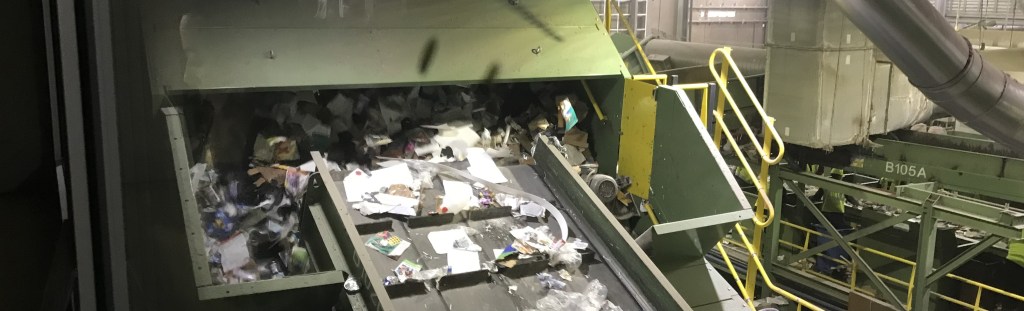
I went along with a school field trip to the recycling center a while back, and stumbling upon these pictures again has me thinking about recycling old ideas into brand new things.

Early on, as I took this fledgling idea of being a writer and tried to learn how to actually do it, I asked my wife for help thinking of character names. All those names are forgotten to time. Almost. Waters Cooper remains.

For some reason, Waters has stuck with me all this time. When I finally found the perfect place for him, it felt like he’d been patiently waiting for this story the whole time. His story.

Around the same time, I had a simple title idea come to mind (an homage to one of my favorite books): A Wizard of the West. I never did anything with it. I wasn’t good enough to write the story it deserved. (I’m still not.) Unused, the title went back from whence it came, waiting in my subconscious for its chance to see the light again. A few years ago it bubbled back up, and while it still isn’t a title I think I’ll use right now, the feeling it invokes has taken hold of my current writing.

Both of these ideas were, over time, forgotten, found again, and recycled into the current series I’m working on, the story of a wizard-in-the-making named Waters Cooper, and his world that, even if it isn’t quite “The West”, definitely branches off the same family tree.

Keep Climbing

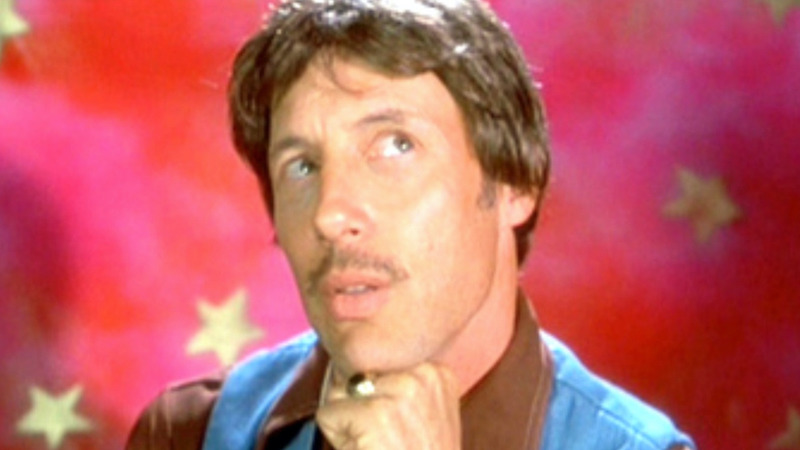
I have a massive fear of peaking too young. You know the scenario. The guys that were the heroes of high school and now sell used cars or something. The Al Bundys of the world. The Uncle Ricos. I fear becoming these guys, their living in the past, their stunted growth.

In my earlier years, this fear actually led to an idea of “pacing myself”, but these days I see that for just another presentation of fear, this one being that I’m not good enough to climb even higher.

Instead, my focus has become one of lifelong learning. I want to be learning something, be growing in some way, right up until the end. This approach has the added benefit of helping me kick the idea that I’m ever “too old” for something. (Well, the NBA is obviously out, but there are a thousand other skills to learn.)

So, even if I feel over the hill sometimes, I try to remember that I’m still climbing toward the peak, not falling away from it. I started chasing this writing dream in my thirties, and in my forties, I’m working harder on building the art skills I’ve let stagnate since high school.

Next decade? Who knows. I’m thinking something musical, maybe guitar, but that’s for future-Justin to decide when the time comes. As long as I keep climbing, I’m good.

I’m an Explorer, not an Engineer

“I am not an engineer, but an explorer. I discovered Earthsea.” – Ursula K. Le Guin

“Stories are found things, like fossils in the ground… Stories are relics, part of an undiscovered, pre-existing world.” – Stephen King

I wish I could write an outline and stick to it. I wish writing one didn’t kill the story for me. My process would be much smoother.

Instead, I have to go digging, searching, exploring, and discover the story somewhere in the unknown parts of my subconscious. The beauty, though, the joy I get from writing, is in that exploration. When the right words, the right worlds, emerge through my fingertips, it feels like magic.