Gifts of the Muse

From the foreword to Le Guin’s The Wind’s Twelve Quarters. I love the way she talks with such reverence about writing.

“The relation between short story and novel, inside the writer’s head, is interesting. ‘Semley’s Necklace,’ though a complete story in itself, was the germ of a novel. I had done with Semley when I finished it, but there was a minor character, a mere by-stander, who did not sink back obediently into obscurity when the story was done, but who kept nagging me. ‘Write my story,’ he said. ‘I’m Rocannon. I want to explore my world. . . .’ So I obeyed him. You really can’t argue with these people.

‘Winter’s King’ was another such germinal story, and so were ‘The Word of Unbinding’ and ‘The Rule of Names,’ though all of them gave me the place, rather than the person, for the novels to come. The last story in the book is not a germinal but an autumnal one. It came after the novel, a final gift, received with thanksgiving.”

Beauty in the Process

A friend shared this video with me a little while ago when I was complaining about the parts of the writing process I didn’t enjoy doing. It’s a good reminder that every step of the process has its own beauty, its own value.

I want to treat all of my efforts with the same level of respect that master sculptor Fred X. Brownstein does here. From the books I read and the art I view, to the books and art I create, I aim to give it all as much love and care as I see in his process. (And, I might just try writing with a newspaper hat on…)

Craving Creativity

Twenty One Pilots released a new album a short while back, and with it, a song I’ve been loving called The Craving. I probably listened to that song at least 50 times the day it released alone, but it’s the video that really got to me. The video itself is a metaphor for the creative process, and the imagery dredged up some deep childhood memories.

The first time I saw the video, I got a rush of the more unpleasant of emotions: sadness, embarrassment, shame. Watching it dug up a memory of my first go with a shotgun, seven or eight years old, my nerves going nuts, and getting knocked back hard as soon as I pulled the trigger. I missed the target, and couldn’t even stay on my feet, caught instead by the guy showing me how to shoot. He knew the kick was coming of course. I didn’t. I handed him the gun and walked away feeling like a failure.

I spent a lot of time at that gun club when I was young, a kind of bar and shooting range blended together. It was a fun place overall, really. I learned to play pool there as soon as I could see over the edge of the table, and I spent hours upon hours playing the Popeye arcade game. I also passed many evenings wandering the range as the shotguns lay silent, collecting unbroken clay pigeons, trying to be useful, and enjoying the stillness, the silence, while everyone else was inside playing pool or poker.

But that one memory, that one failure, has the power to creep in and override everything else. That day, as the story of my failed shotgun attempt made the rounds, it was met with laughter. Of course I got knocked back. Didn’t I know the kick was coming? Ha ha! Stupid kid. And as those emotions came boiling back up, I kept watching the video, kept listening to the song, kept pushing through the emotions.

As the days passed, and my view count racked up, I started to see the video and my story, in a different light. I realized that all the value, all the joy, is in the process, the creation.

Thinking back on my gun club experiences, I remembered the hours spent filling shotgun shells, one of my favorite activities. I remembered the mechanics of the machine, and how satisfying it was to combine the varied parts to make something new and useful.

I lingered on the memory of my hours spent walking the range, some of the most peaceful times I could get at that age. It was just me, wandering the field, my shoes crunching through chunks of broken clay as the easy breeze drifted in from the bay. I was simply exploring then, trying to discover useful things, without much care of what happened after.

It’s not much different from what I do now. I sit here, putting words on the page, and try to find the useful bits I can combine to create something whole. The value is in the journey, in the process. And the beauty is nobody can take that process away. Not critics, not reviewers, not even our robot overlords.

None of this is original thinking of course, but sometimes we need a reminder, to hear it in a fresh way, like I did with this song. Now, watching it one more time, I’m craving a bit more creativity, because that’s the part that really matters.
Counting Corvids

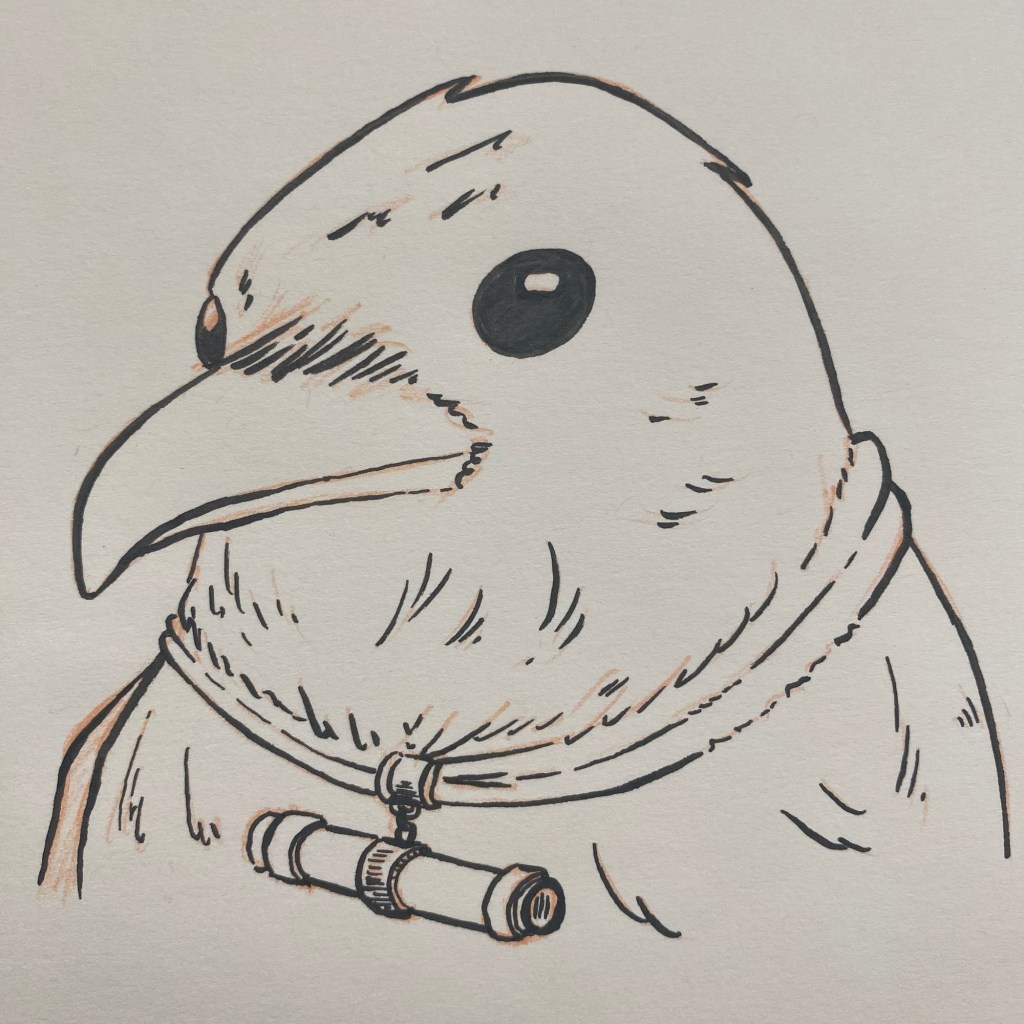
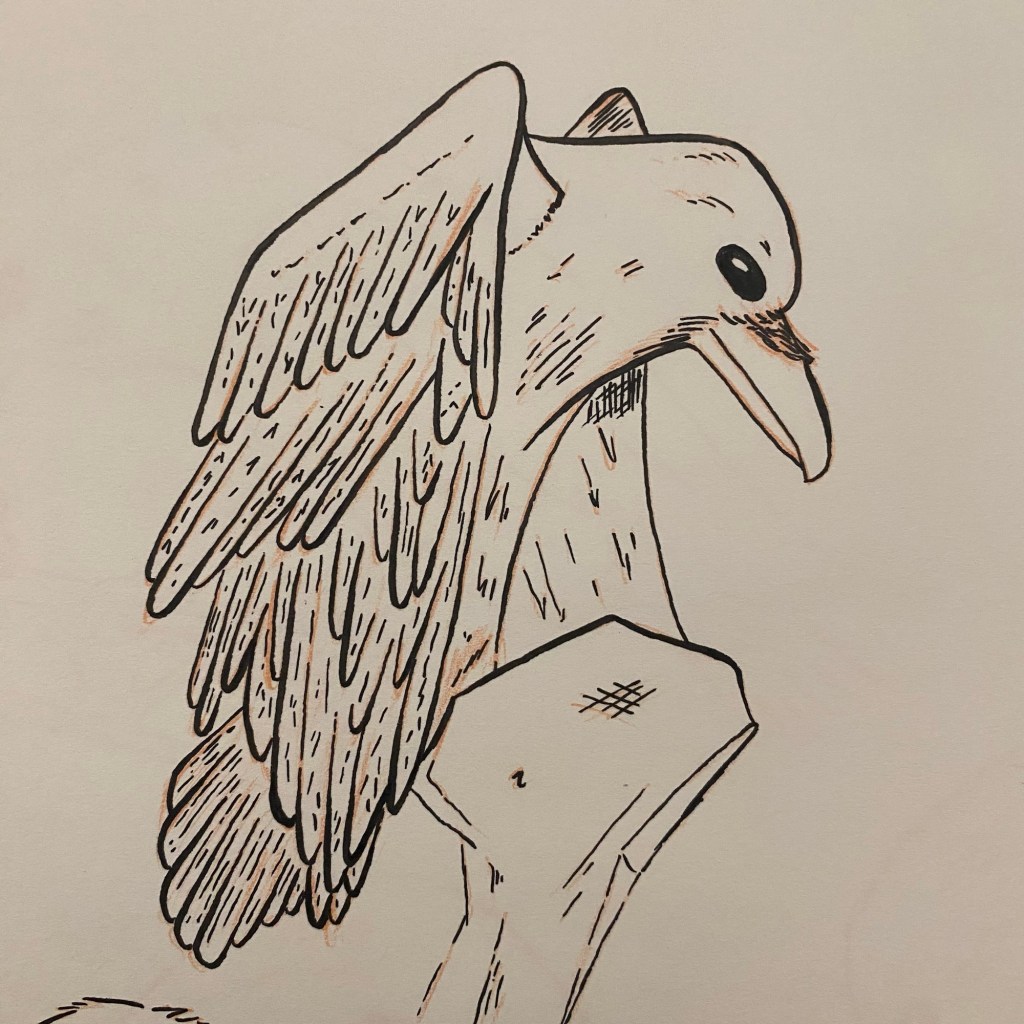
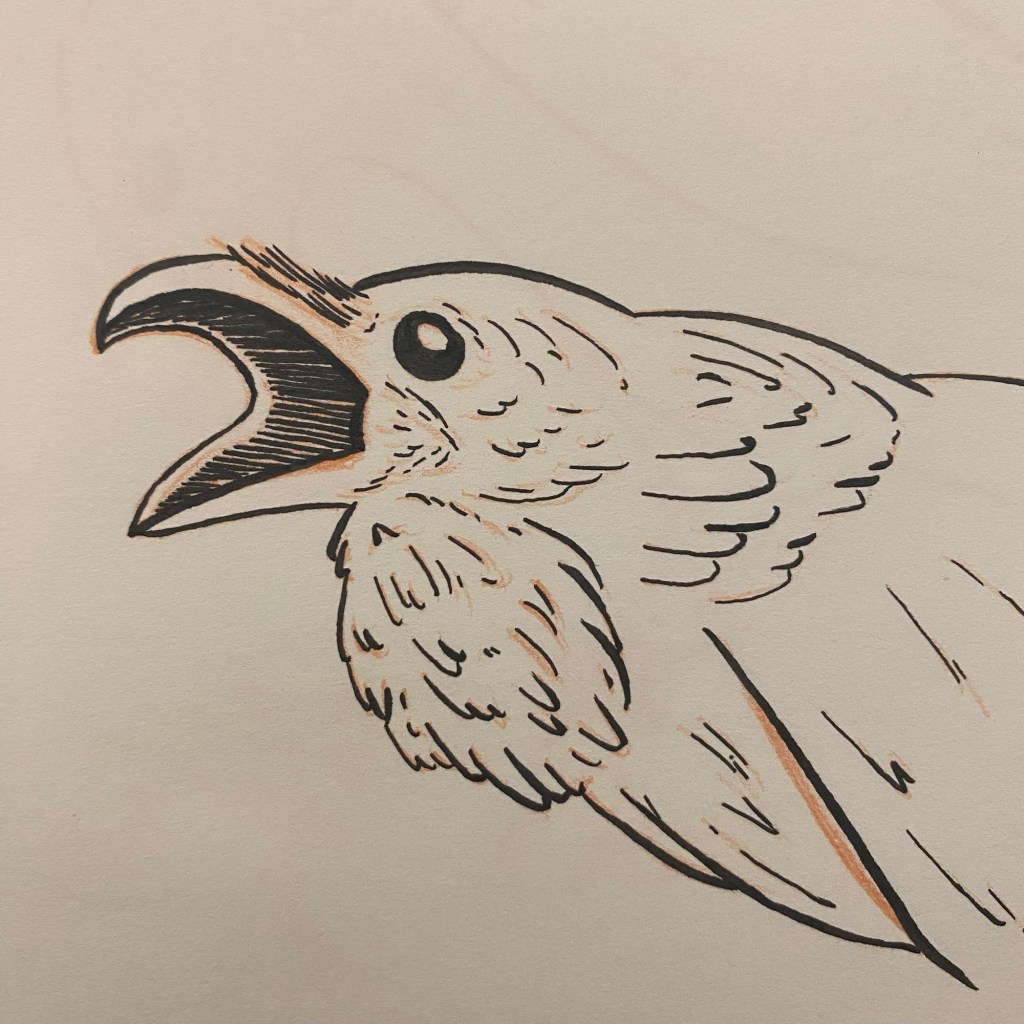
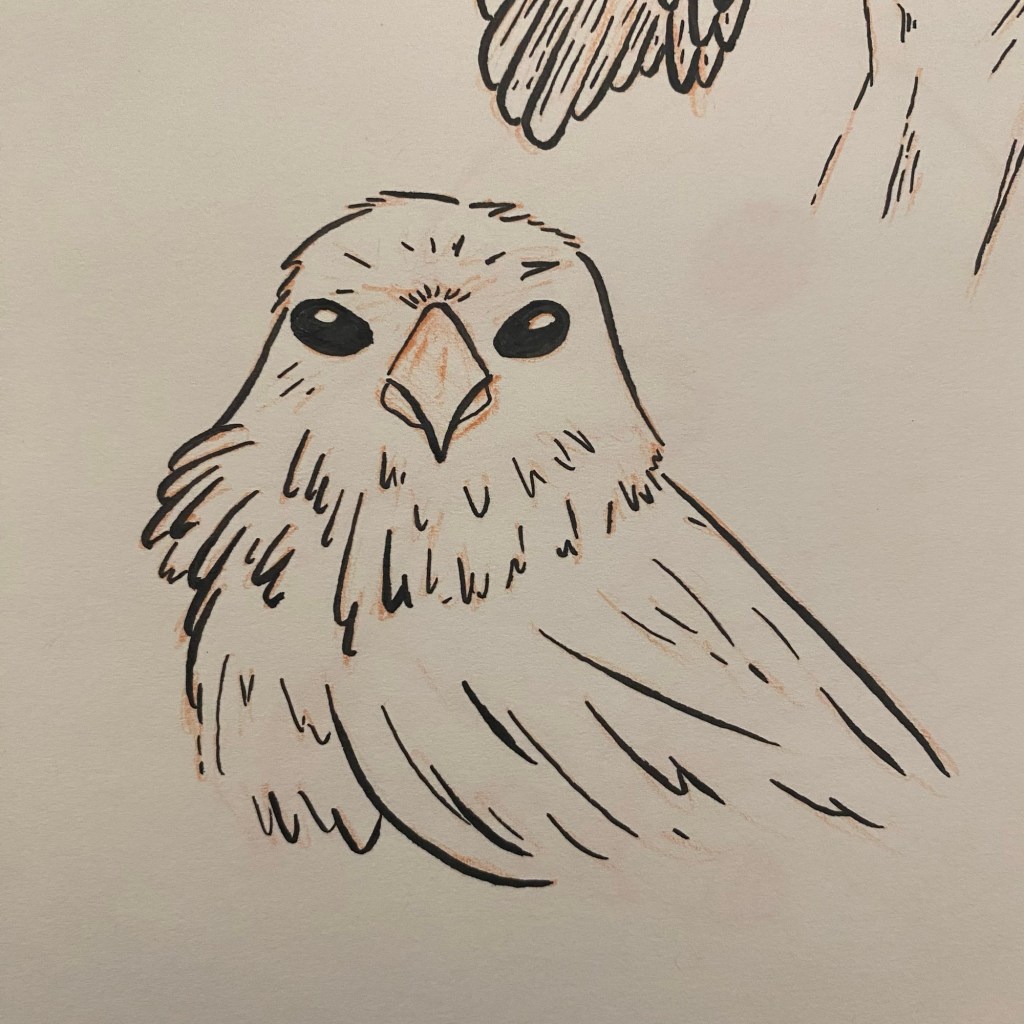
Sunday morning sketches: crows and ravens. Working on my brush pen skills (Uni-ball’s Uni Pin in this case). Playing with some ideas for my fantasy series, too. I wrote a “Morse crow” into the first draft, so I need to see what that means. Maybe he carries the message, maybe he taps it out himself…

Heinlein’s Rules

In a 1947 essay titled “On the Writing of Speculative Fiction,” writer Robert A. Heinlein laid out his now-famous rules. I’ve tried to follow them in the past with varied success, struggling most with #2 and #5. I’m sharing them now as a reminder to myself more than anything. His rules (with an addition from Harlan Ellison that I learned watching Neil Gaiman) are these:

  1. You must write
  2. You must finish what you start
  3. You must refrain from rewriting except to editorial order
    (…and then, only if you agree – Ellison)
  4. You must put it on the market
  5. You must keep it on the market until sold

I have a habit of overcomplicating things, of trying to go down too many paths at the same time and finding myself stuck for my confused effort. Instead, I’ll be simplifying things going into the last few months of the year.

Keep it simple.

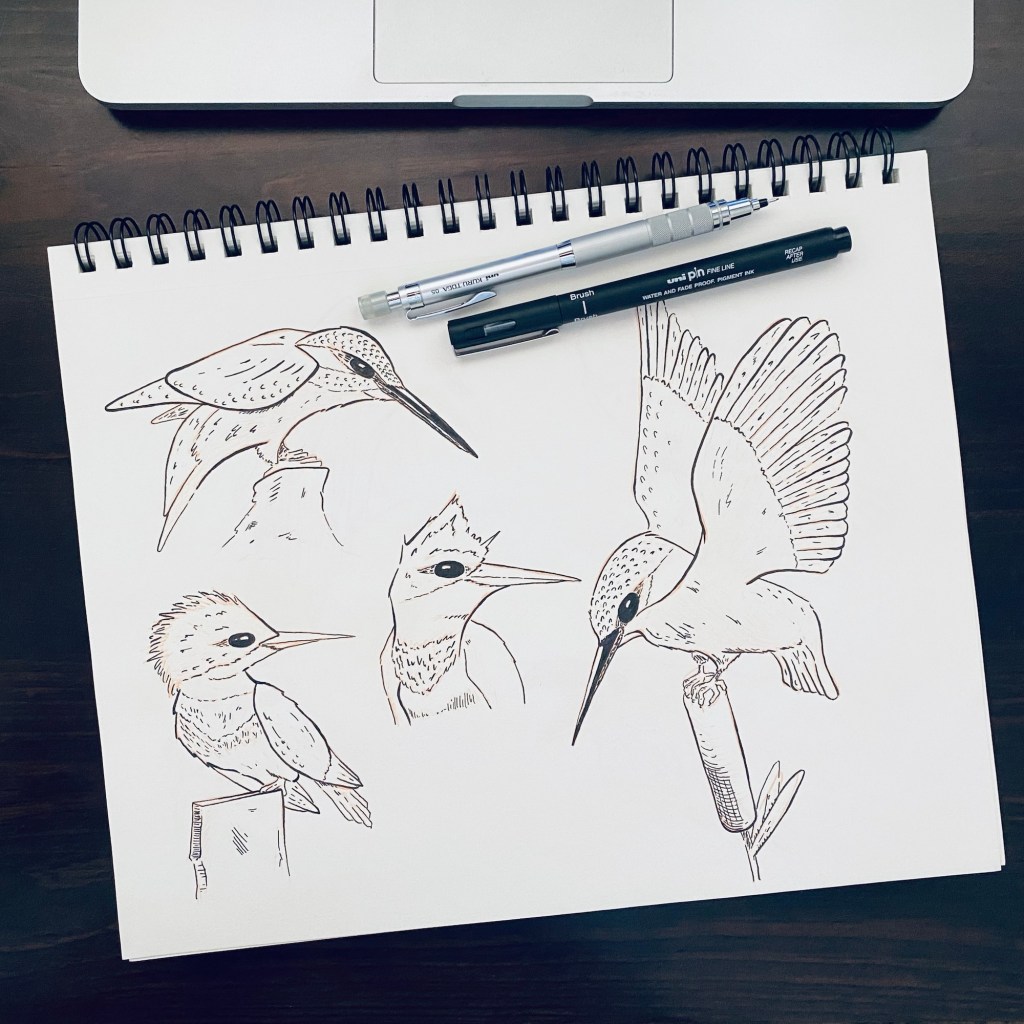
Kingfisher Sketches

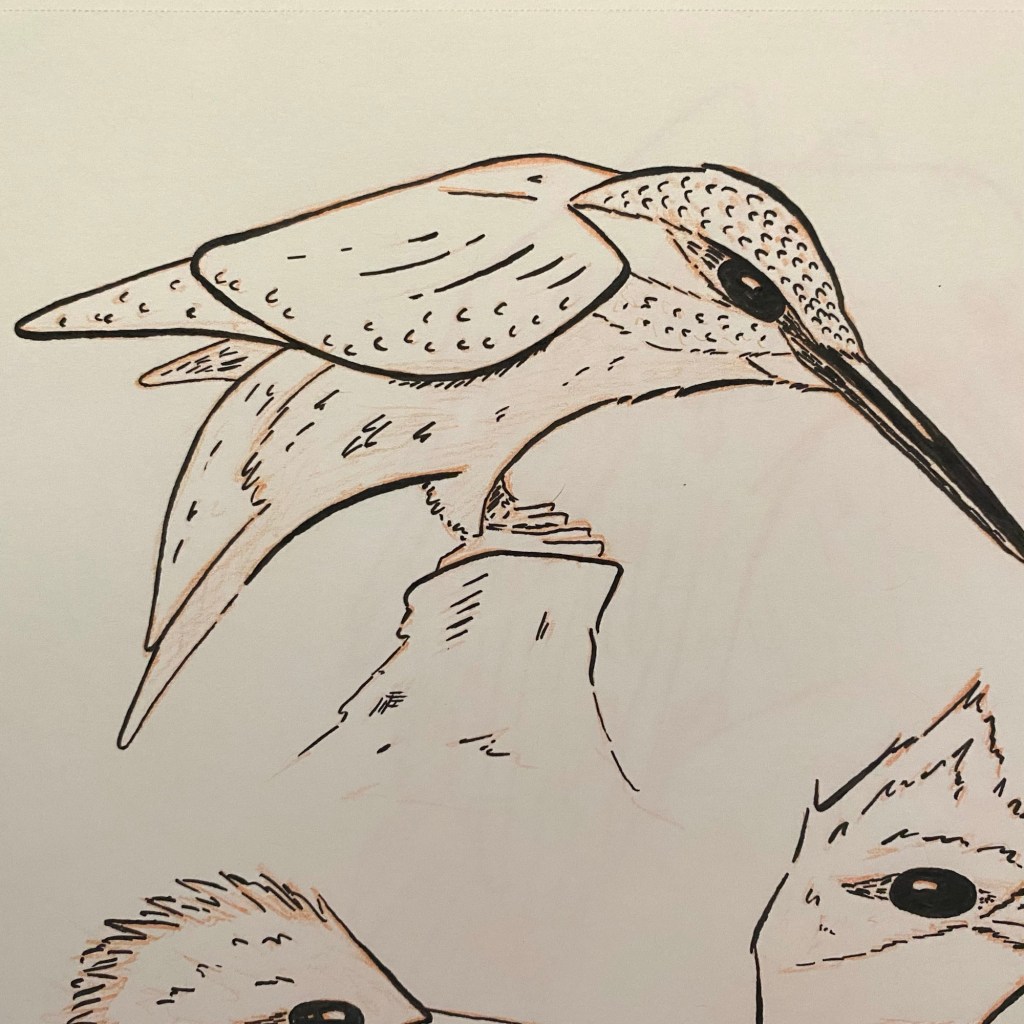
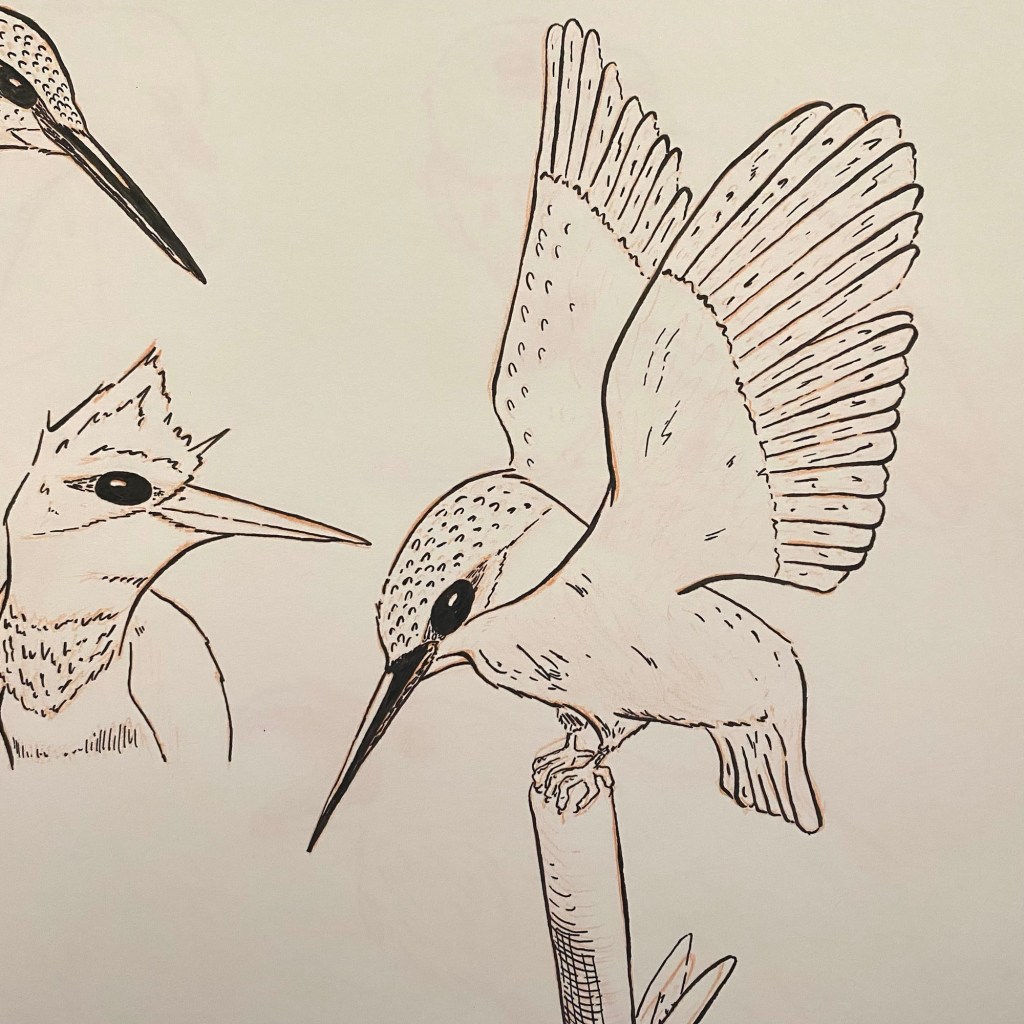
I’ve been trying to get more drawing time in lately, and learn how to handle a brush pen as I do it. I struggle to visualize things in my head most of the time, so improving my drawing skill is a massive benefit to getting ideas down clearly and “seeing” the worlds in which I’m writing.

Closer and unfiltered shots below:

Consistent Effort

When I wrote my first novel, I did it through the consistency of writing every day. Participating in 2022’s National Novel Writing Month, I wrote daily for weeks straight, plowing through a novel that I’d been dreaming about writing for more than two years at that point. (And all of that after ten years of struggling to write any novel.)

The following spring I wrote another novel, again in a wave of consistency. And later that year, I wrote my third, finishing it during another NaNoWriMo rush.

Lately, I’ve been struggling with getting to the keyboard. It seems like all the “little things” in life keep popping up, stopping me before I start. But it’s only resistance, and it’s only winning because I let it, because I’m in an all-or-nothing mentality. If I can’t get my scheduled couple of hours, I might as well not start.

Consistency doesn’t mean I have to spend hours a day writing, though, it means I have to spend one, or thirty minutes, or fifteen. It’s not about hours per day. It’s about days showing up. If I had sat down for even five minutes a day, I’d have more words to show for the last few weeks than I do now.

Ideally, I’d hit a thousand words a day. On average, that amounts to about an hour, even less if I hit a good flow. (For the record, I hit my thousand word goal this morning in thirty-two minutes.) Like Bradbury said, “All I need is an hour, and I’m ahead of everyone.” Hardly a day goes by where I can’t squeeze in at least an hour of writing, even if it means setting the alarm a bit earlier.

A thousand words a day, consistently, is enough to write every story idea bouncing around my head, fifty of them by my last count, about half shorts and the other half novels. A thousand words a day gets them all done by my fiftieth birthday, a kind of fifty by fifty scenario.

On that birthday, I can look back with regret, or I can look back on the years of consistency that took my life to the next level. It’s as simple (but not easy) as that.


Heading photo by Aron Visuals on Unsplash